
Blockchain isn’t magic. It’s not about crypto prices. And most projects using it shouldn’t be.
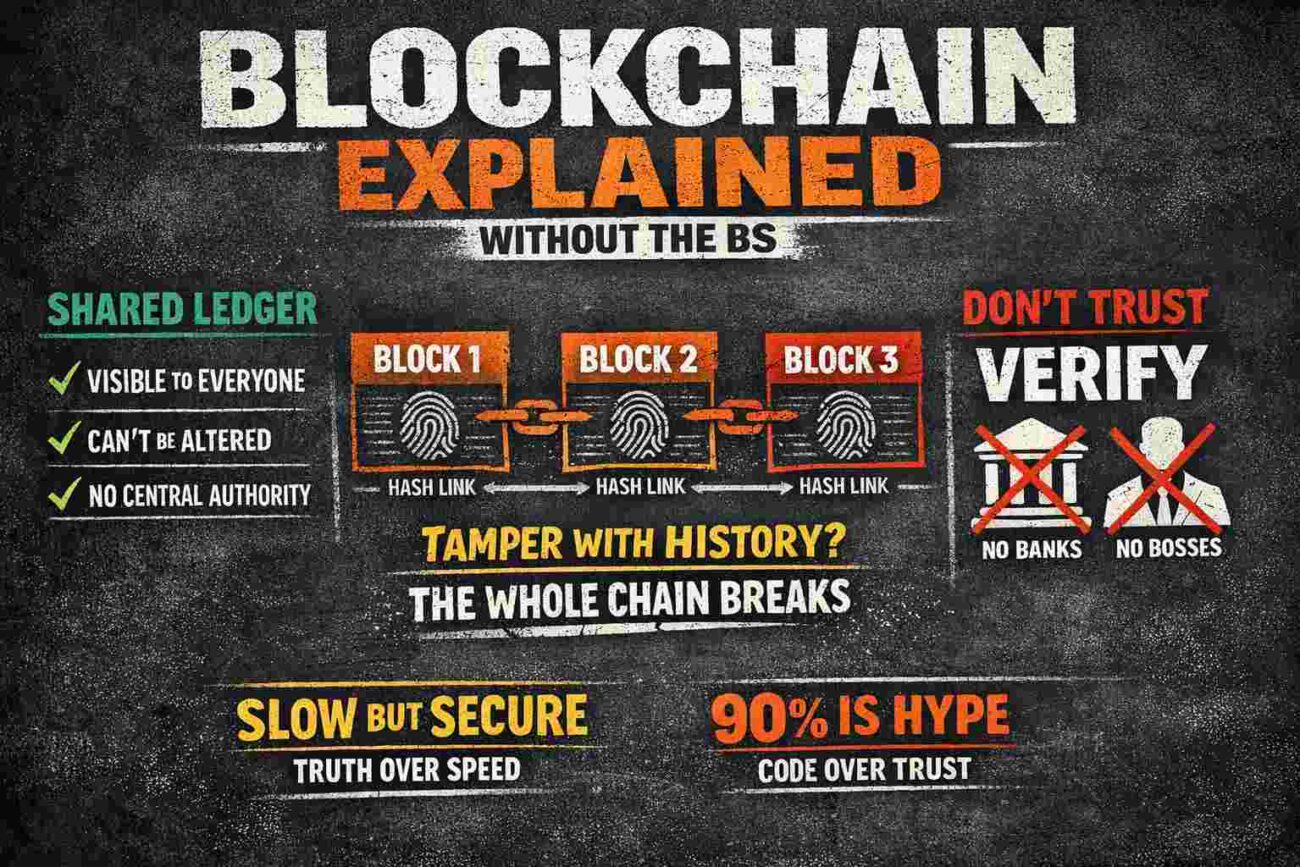
At its core, blockchain is brutally simple. A blockchain is a shared ledger: Everyone can see it, no one can secretly change it and no single owner controls it.
Think of it as a public notebook that can only move forward. No erasers. No admins.
Blocks, Chains, and Why Cheating Fails
Each block contains data plus a fingerprint of the previous block.
Change the past?
You break the fingerprint.
Break the fingerprint?
Everyone notices.
That’s the trick. Not encryption. Not tokens. History glued together by math.
No Trust, Only Verification
Banks ask you to trust them.
Blockchains ask you to verify.
Thousands of computers hold copies of the same ledger and agree on what’s valid. No “please believe us” page.
If the system lies, you can prove it.
Slow by Design
Blockchains are slower than databases. That’s not a bug — it’s the price of:
- Immutability
- Transparency
- Censorship resistance
The Uncomfortable Truth is that 90% of blockchain projects don’t need a blockchain.
They need a database and less marketing.
Blockchain only makes sense when:
- No one should be in charge
- History must be permanent
- Trust is the actual problem
