
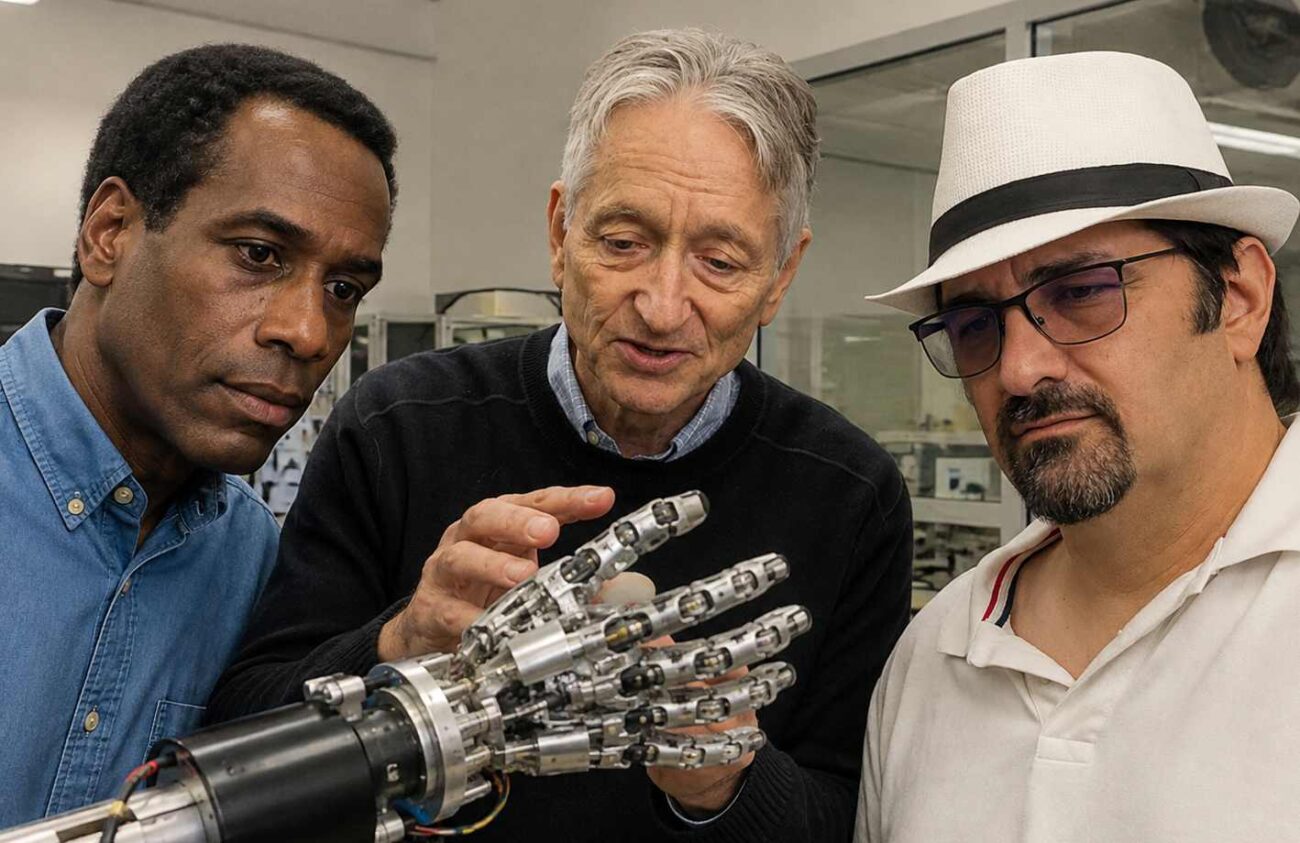
Geoffrey Hinton is one of the most important figures in modern artificial intelligence.
A British-Canadian computer scientist and cognitive psychologist, Hinton spent decades developing ideas behind neural networks and deep learning. His research helped make possible many of today’s AI systems, including image recognition, speech recognition and large language models (LLM).
In 2024, Hinton and John Hopfield received the Nobel Prize in Physics for foundational work that enabled machine learning with artificial neural networks.
Hinton was an early believer in neural networks at a time when many researchers doubted they would become useful.
His work contributed to important techniques including backpropagation, distributed representations and Boltzmann machines.
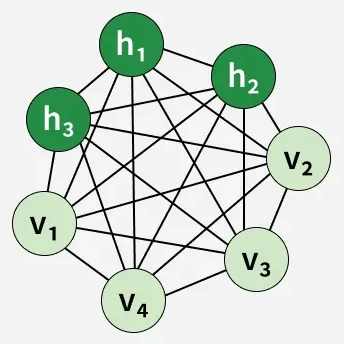
The basic idea behind neural networks is different from traditional programming. Instead of writing every rule manually, researchers create a system that learns patterns by training on large amounts of data.
That approach became the foundation of the modern AI boom.
Does Hinton Say We Don’t Understand AI?
Yes, but this claim is often exaggerated.
Hinton is not saying scientists have no idea how AI works. Researchers understand the mathematics, architectures and training methods used to build neural networks.
The harder problem is understanding exactly what a large trained model has learned internally and why it produces every particular behavior.
A neural network can contain billions of parameters that were learned automatically during training. Humans did not individually program what each parameter should represent.
This is known as the AI interpretability problem.
In simple terms: we understand how we train these systems, but we do not always fully understand the internal solutions they discover.
From AI Pioneer to AI Warning Voice
Hinton left Google in 2023 and began speaking more openly about the possible dangers of advanced AI.
He has warned that future AI systems could eventually become more intelligent than humans and potentially difficult to control.
At the same time, Hinton has also emphasized AI’s enormous potential benefits, particularly in areas such as healthcare and scientific research.
That makes his position especially interesting. He is not an outsider criticizing AI. He is one of the scientists whose work helped create the technology.
Hinton’s story captures one of the biggest questions facing the technology industry today:
We have learned how to build increasingly intelligent machines. The next challenge is making sure we understand and control what we create.
